
The landscape for home service marketing has fundamentally shifted. What worked two years ago isn’t cutting it anymore, and businesses still running on outdated strategies are watching their lead costs climb while competitors pull ahead.
If you’re in HVAC, plumbing, electrical, water damage restoration, or any other home service business, this guide breaks down exactly what’s working right now and what you need to build a marketing system that actually scales.
The Reality: Google Has Changed the Game
Google’s been quietly moving home service businesses into a pay-to-play model. The organic map pack still exists, but it’s not driving calls like it used to. Local Services Ads are sitting above everything now, and that’s where people are clicking first.
This isn’t speculation. We’re seeing it across every market we work in. Call volume from Google Business Profiles is down. Website visits and direction requests are up. The behavior has changed, and the businesses adapting fastest are the ones treating LSAs as their primary channel, not just something they test on the side.
Your Google Business Profile: From SEO Asset to Ad Infrastructure
Your Google Business Profile used to be about ranking in the map pack. Now it’s your Local Services Ads application.
Google checks your GBP to decide if you even qualify to run LSAs. Categories, service areas, reviews, response time. All of it matters. We’ve seen businesses get their LSA campaigns rejected because their GBP was incomplete. Or they finally get approved and can’t figure out why leads aren’t coming in. Same root issue.
If your Google Business Profile isn’t optimized, your LSA ads won’t even run properly. No reviews, wrong categories, incomplete service areas equals no visibility. This needs to be locked in before you spend a dollar on paid ads.
If you’re planning to run LSAs in 2026, your GBP needs to be dialed in first. It’s not optional anymore. Get your GBP audit here.
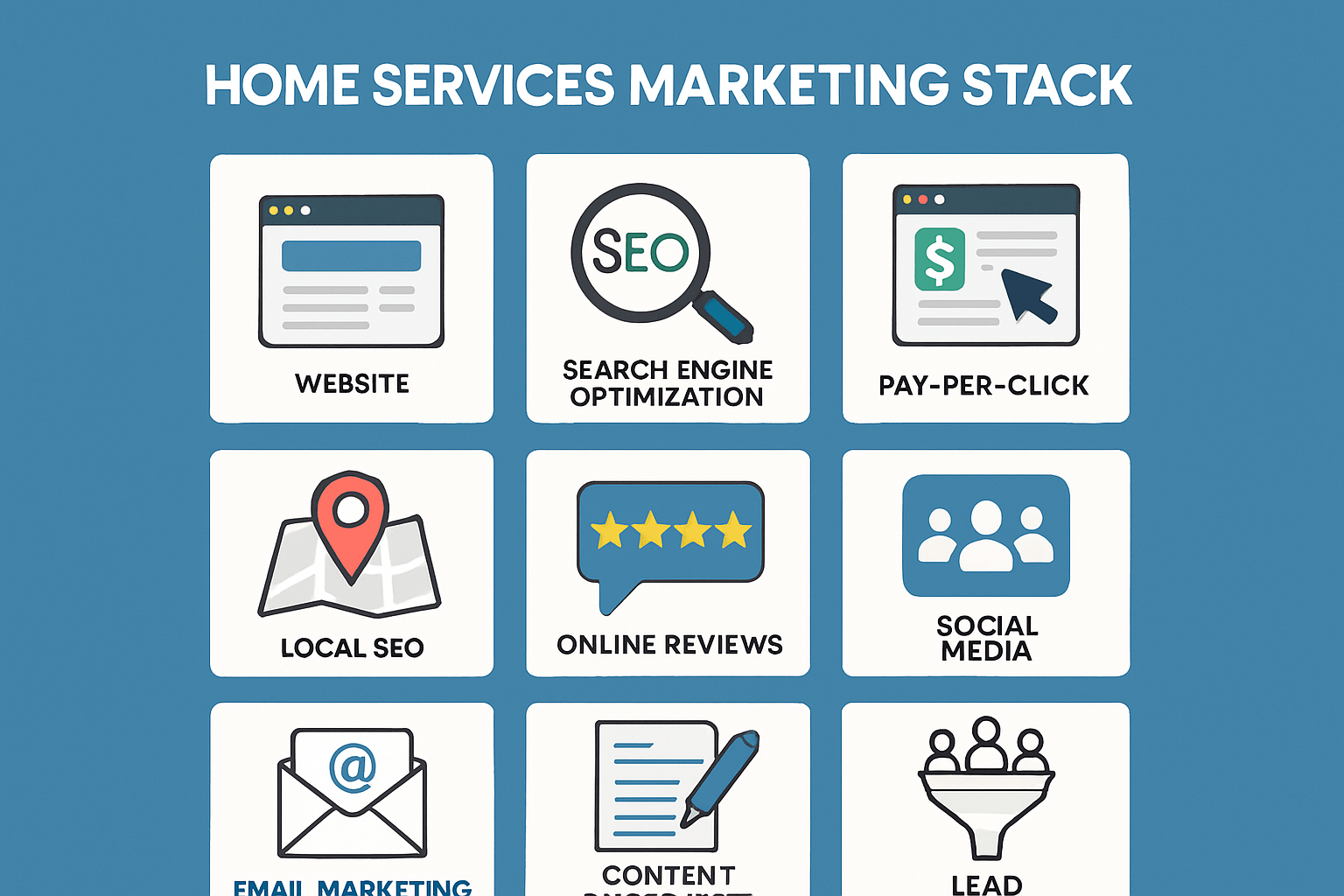
The 2026 Marketing Stack: What’s Actually Working
The businesses winning right now aren’t just running one channel. They’ve built a complete system. Here’s the stack:
1. Local Services Ads (Primary Driver)
This is where Google is pushing everyone. LSAs sit at the top of search results, above paid search, above the map pack. They’re pay-per-lead instead of pay-per-click, which means you’re only charged when someone actually contacts you.
When set up correctly, we’re seeing much better ROI from LSAs than traditional search ads. But there’s a catch: LSAs only work when your Local SEO foundation is solid. Your GBP needs to be optimized, your reviews need to be consistent, and your business information needs to be accurate everywhere.
Here’s a critical setting most businesses miss: turn off direct business search in your LSA campaigns. Otherwise, you’re paying premium prices for people who already know your name. That’s wasted spend. Put your dollars toward discovery, not loyalty.
2. Google Ads (Gap Filling and Brand Protection)
Paid search still has a place, but its role has changed. Use it to fill in gaps where LSAs don’t cover certain search terms or to protect your brand when competitors are bidding on your business name.
The barrier to entry for effective Google Ads in home services is higher than most businesses realize. We see it all the time: daily budgets around $20, clicks costing $0.50 to $1, leads coming in at $5 to $10. It looks fine on the surface until you check lead quality. Job seekers, spam, people just browsing. Rarely qualified homeowners ready to buy.
The reality is different depending on your industry:
Roofing / Water Damage Restoration:
- CPC: $50+
- Conversion rate: 10–20%
- Cost per lead: $300–$500
- Close rate: 30%
- Cost per customer: $1,000–$1,500
Moving / Landscaping / Irrigation:
- CPC: $15–$20
- Conversion rate: 25–30%
- Cost per lead: $50–$60
- Close rate: 30%
- Cost per customer: $160–$200
If you want to show up in the right spot above organic results, you need to be bidding at the top end of estimated CPC. It’s not about cheap clicks. It’s about qualified intent, smart conversion, and consistent follow-up.
3. Facebook Ads (Retargeting and Awareness)
Facebook is for staying in front of people who didn’t convert the first time. Someone visits your website from a Google search but doesn’t call? Hit them with a Facebook ad reminding them why they were looking in the first place.
It’s also useful for building awareness in your service area, especially for businesses that benefit from being top-of-mind when an emergency happens. Water damage, HVAC failures, electrical issues. These are problems people need solved immediately, and being the first name they think of matters.
4. A Website That Actually Converts
Something’s changed with how people interact with Google Business Profiles. The call button used to get hit constantly. Now it’s mostly website visits and direction requests. People want to browse before they commit to a call.
For home service businesses, this means your website has to convert. You can’t just rely on the phone ringing from your GBP anymore.
Lots of businesses think their ads aren’t working. But when you look closer, the problem is usually the website. Slow, unclear, no trust signals, weak call to action. Google is sending traffic. The traffic just isn’t converting.
Your homepage isn’t enough. You need landing pages built for conversion with clear offers, trust signals like reviews and badges, and strong calls to action. Fix the website first. Then worry about scaling ad spend.
The Part Everyone Ignores: Tracking and Follow-Up
Running ads without tracking is like driving with your eyes closed.
Most home service businesses we talk to can tell us how much they spend. But they can’t tell us what their cost per qualified lead actually is. Or their close rate from paid channels.
LSAs give you some of this data built in, but you still need to connect it to what happens after the lead comes in. Did they book? Did you close them? What was the job worth?
The businesses that track this stuff properly can make better decisions about where to spend. The ones that don’t are just guessing.
Here’s what you need to be tracking:
- Cost per lead by channel
- Lead quality scoring
- Quote rate from leads
- Close rate by channel
- Average job value by source
- Overall ROI by marketing channel
PPC margins in home services are too tight to fly blind. You need to follow leads all the way through the sales process. Score them, track qualified leads, close rates. Most companies run ads, set up some tracking, and call it a day. Then they wonder why leads don’t convert. That’s only Step 1.
Paid ads don’t fix a broken sales process. If you’re not dialed in with clear follow-up, pipeline visibility, and a real conversion strategy, you’ll always be asking if the ROI is there. Get the backend right first. Then hit the gas.
Why Multi-Channel Matters
One channel might work for a while, but it’s not sustainable. Google changes things. Costs shift. Competition increases. The goal is to build a system that doesn’t fall apart when one piece gets expensive or stops performing.
You need to show up in multiple places because people don’t all search the same way. Some hit LSAs first. Some scroll past them to paid search. Others check the map pack. Some go straight to your website after seeing your Facebook ad last week.
When all these channels are dialed in, they don’t just perform independently. They amplify each other. Someone sees your Facebook ad, searches for you on Google, finds you in LSAs with great reviews, visits your website, and calls. That’s how the best results happen.
The Bottom Line
The 2026 marketing stack for home services isn’t flashy, but it works:
- Start with a solid Google Business Profile
- Make Local Services Ads your primary driver
- Use paid search strategically for gaps and brand protection
- Layer in Facebook for retargeting
- Make sure your website can convert the traffic you’re paying for
- Track everything so you know what’s actually working
Businesses running this setup consistently are seeing better lead quality and more predictable growth. It requires thinking about visibility differently, but the results speak for themselves.
Need help building this out for your business? Let’s talk about your marketing strategy.

[…] I get it. You work out of your house. You don’t have customers coming to you. So listing as a service area business makes sense, […]
[…] you’re a home service contractor in 2026 and you’re not running Local Services Ads as your primary paid channel, you’re paying more per […]